Israel Unveils Secret Hezbollah Bunker Containing $500 Million Under Beirut Hospital
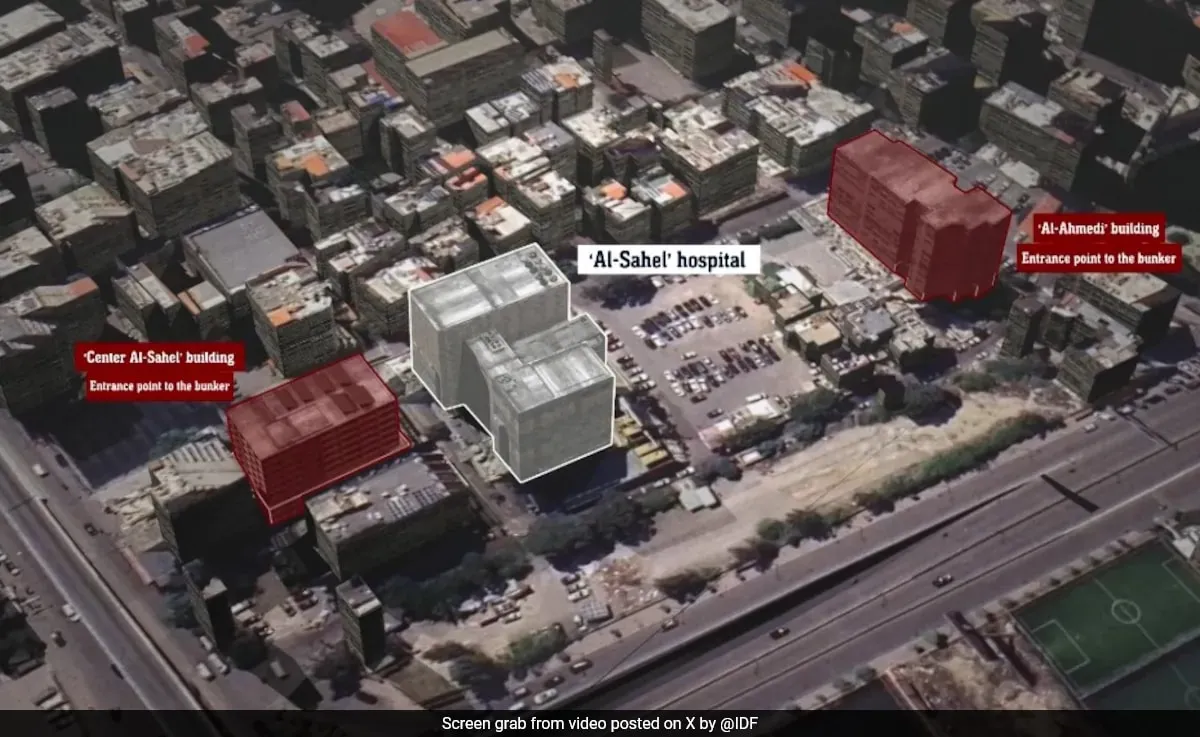
In a startling revelation, Israel announced on Monday that it has declassified intelligence pointing to the existence of a secret Hezbollah financial hub located beneath the Al-Sahel Hospital in the heart of Beirut. The Israel Defense Forces (IDF) claim that the bunker houses approximately $500 million in cash and gold, allegedly used to fund Hezbollah's military and terrorist operations.
The Declassified Intelligence
During a televised briefing, IDF spokesperson Rear Admiral Daniel Hagari disclosed detailed information about the bunker. He stated:
"Tonight, I am going to declassify intelligence on a site that we did not strike—where Hezbollah has millions of dollars in gold and cash in Hassan Nasrallah's bunker. The bunker is located directly under Al-Sahel Hospital in the heart of Beirut."
The IDF also shared this information on their official social media channels, emphasizing the significance of the discovery. Despite identifying the location, Hagari mentioned that the site has not been targeted yet:
"According to estimates, there is at least half a billion dollars in dollar bills and gold stored in this bunker. This money could and still can be used to rebuild the state of Lebanon."
Targeted Airstrikes on Hezbollah Assets
The disclosure followed a series of targeted airstrikes conducted by the Israeli Air Force on Sunday night. The strikes aimed at crippling Hezbollah's financial infrastructure, specifically targeting nearly 30 Hezbollah-linked locations. Among these were sites operated by Al-Qard Al-Hassan (AQAH), an organization registered as a charity but accused by Israel and the United States of being Hezbollah's financial arm.
Rear Admiral Hagari elaborated on the significance of these targets:
Underground Vaults: One key target was an underground vault containing tens of millions of dollars in cash and gold.
Funding Terrorism: The resources stored in these locations were allegedly being used to fund attacks on Israel.
Future Strikes: Hagari hinted at the possibility of further airstrikes targeting additional financial hubs associated with Hezbollah.
The Role of Al-Qard Al-Hassan
Al-Qard Al-Hassan has been operating in Lebanon since the 1980s, providing credit to Lebanese citizens in exchange for gold deposits. While it presents itself as a charitable organization, Israeli and U.S. officials argue that AQAH serves as a crucial component in Hezbollah's financial network. The organization is accused of:
- Facilitating money laundering activities.
- Providing Hezbollah access to vast cash and gold reserves.
- Operating under the guise of civilian banking to fund military operations
Disrupting Hezbollah's Financial Network
The IDF's recent operations are part of an intensified effort to disrupt Hezbollah's financial channels. According to IDF Chief of Staff Lt Gen Herzi Halevi, the campaign involved over 300 strikes on Hezbollah positions in Lebanon over 24 hours, focusing on:
- Financial Hubs: Disabling key financial centers to cut off funding.
- Logistical Support: Targeting infrastructure that supports Hezbollah's military activities.
Alleged Sources of Income
Rear Admiral Hagari claimed that Hezbollah's primary sources of income are:
- The Lebanese People: Through organizations like AQAH, Hezbollah allegedly taps into the local economy.
- The Iranian Regime: Financial support is purportedly funneled through cash transfers via Syria and gold smuggled into Lebanon from Iran.
He further alleged that Hezbollah operates factories in Lebanon, Syria, Yemen, and Turkey, generating substantial income to support their activities.
Assassination of Hezbollah Financial Leaders
In a related development, Israel conducted an airstrike in Syria on Monday, targeting the head of Hezbollah's financial unit, known as Unit 4400. This unit is responsible for:
- Managing the flow of Iranian funds to Hezbollah.
- Handling proceeds from Iran's oil sales.
The unnamed commander, who had been in the position for only a few weeks, was killed in the strike. This marks the second significant assassination of a Hezbollah financial figure in recent weeks. Earlier in October, Israeli forces killed Mohammed Jafar Ksir, also known as Sheikh Salah, who had long overseen Hezbollah's revenue streams.
Escalating Hostilities Between Israel and Hezbollah
The latest Israeli operations come amid a significant escalation in hostilities between Israel and Hezbollah:
- Solidarity with Hamas: Hezbollah initiated attacks in solidarity with Hamas following the October 7 attacks in 2023.
- Casualties: Israeli officials estimate that approximately 2,000 Hezbollah fighters have been killed since the conflict widened in late September 2023.
- Retaliatory Strikes: Hezbollah has responded with rocket attacks targeting Israeli towns and military positions, including a recent barrage aimed at an intelligence base near Tel
International Reactions and Implications
The revelation of a secret bunker beneath a hospital raises concerns about:
- Use of Civilian Infrastructure: The alleged use of a hospital to conceal military assets violates international laws and endangers civilian lives.
- Regional Stability: The escalating conflict poses a risk to regional stability in the Middle East.
- Humanitarian Concerns: Potential airstrikes on such locations could lead to significant civilian casualties.
Conclusion
Israel's disclosure of the secret Hezbollah bunker signifies a strategic move to disrupt the group's financial capabilities. The uncovering of such significant assets beneath a civilian hospital adds a complex layer to the ongoing conflict, highlighting the challenges in distinguishing between military targets and civilian infrastructure.
As tensions continue to escalate, the international community watches closely, concerned about the potential for broader conflict and the humanitarian implications for the Lebanese population.
Reference From: www.ndtv.com